Contents
- Introduction
- What is an Udawalawe National Park safari like?
- What happens when you arrive at the gate?
- Will you definitely see elephants?
- What other animals will you see on the drive?
- Will you see a leopard in Udawalawe?
- Where in the park do safaris go?
- Is a morning or an afternoon drive better?
- How close do jeeps get to the elephants?
- What are the rules inside the park?
- Why shouldn’t you feed elephants by the road?
- What should you wear on safari?
- What should you bring on the drive?
- How do you take good wildlife photos from a jeep?
- Is an Udawalawe safari good for children?
- What is the weather like on safari?
- Who guides you on the drive?
- How do you book an Udawalawe safari?
- Ready for your Udawalawe safari?
An Udawalawe National Park safari is a few hours in an open jeep, bumping along dirt tracks across grassland and scrub around a big reservoir, with elephants the star of almost every drive. This guide tells you what actually happens, from the moment you reach the gate to the last herd at the water, so you know what to expect before you go.
If you want the bigger picture first (where the park is, the seasons and where to stay), read our complete guide to Udawalawe National Park.
What is an Udawalawe National Park safari like?
It’s a slow, open-air drive in a safari jeep with a driver who knows the park, usually lasting two to four hours. Shorter drives last 2 to 3 hours, and the main event is elephants, which are a common sight in Udawalawe and can be observed at any time of the day.
Expect a mix of long, quiet stretches and sudden excitement. One minute you’re crossing empty grassland, and the next your driver has stopped beside a herd feeding a few metres from the track. You’ll spend a few hours sitting in a jeep, so a comfortable seat and a bottle of water make a real difference.
What happens when you arrive at the gate?
Your driver queues at the park entrance, you pay the entrance fee, and then you head straight into the park. As soon as you enter, you need to pay the entrance fee, unless your safari price already includes it.
The park is open every day from 6.00 a.m. to 6.00 p.m., and ticket counters close at 4.00 p.m. For a morning drive, plan to be in the queue before opening, because the first hour is the coolest and calmest part of the day.
Have your payment ready before you reach the window. Foreign visitors may pay in USD or the equivalent amount in LKR.
Will you definitely see elephants?
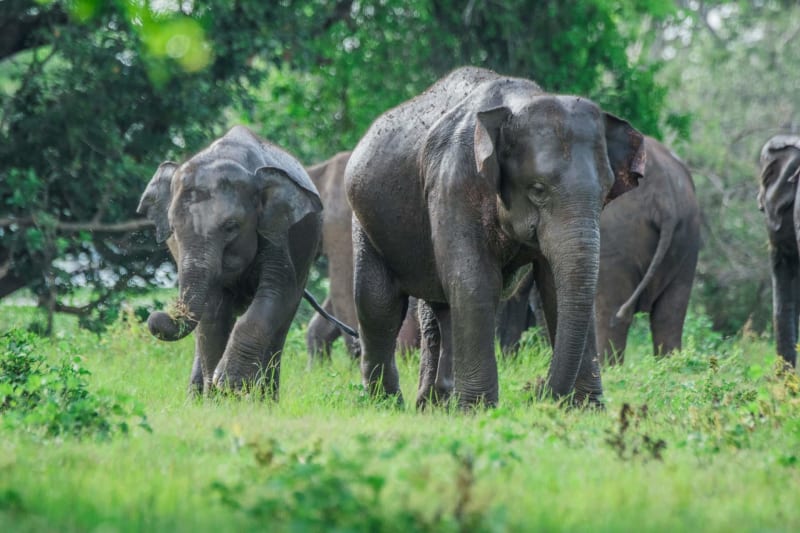
Nothing in the wild is guaranteed, but elephants are as close to a sure thing as any safari gets. The park has a herd of about 250 believed to be permanently resident, and visitors writing in 2011 counted 10 elephants in a morning and seven in an evening.
Where you see them depends on the time of day and the season. Near rivers and the reservoir, the chances of seeing a herd of Sri Lankan elephants are particularly high, so expect your driver to work the water’s edge.
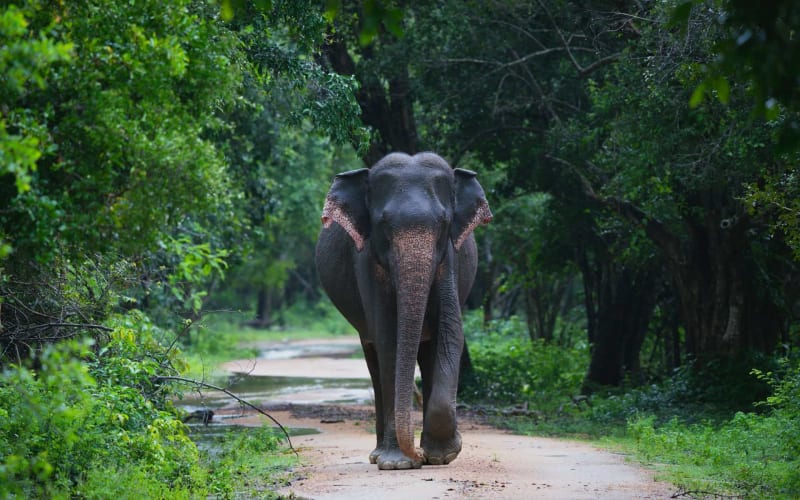
Look for the details that make Sri Lankan elephants special. They’re the largest Asian elephant subspecies, and they have larger and more distinct patches of depigmentation, pink and freckled, on the ears, face, trunk and belly.
What other animals will you see on the drive?
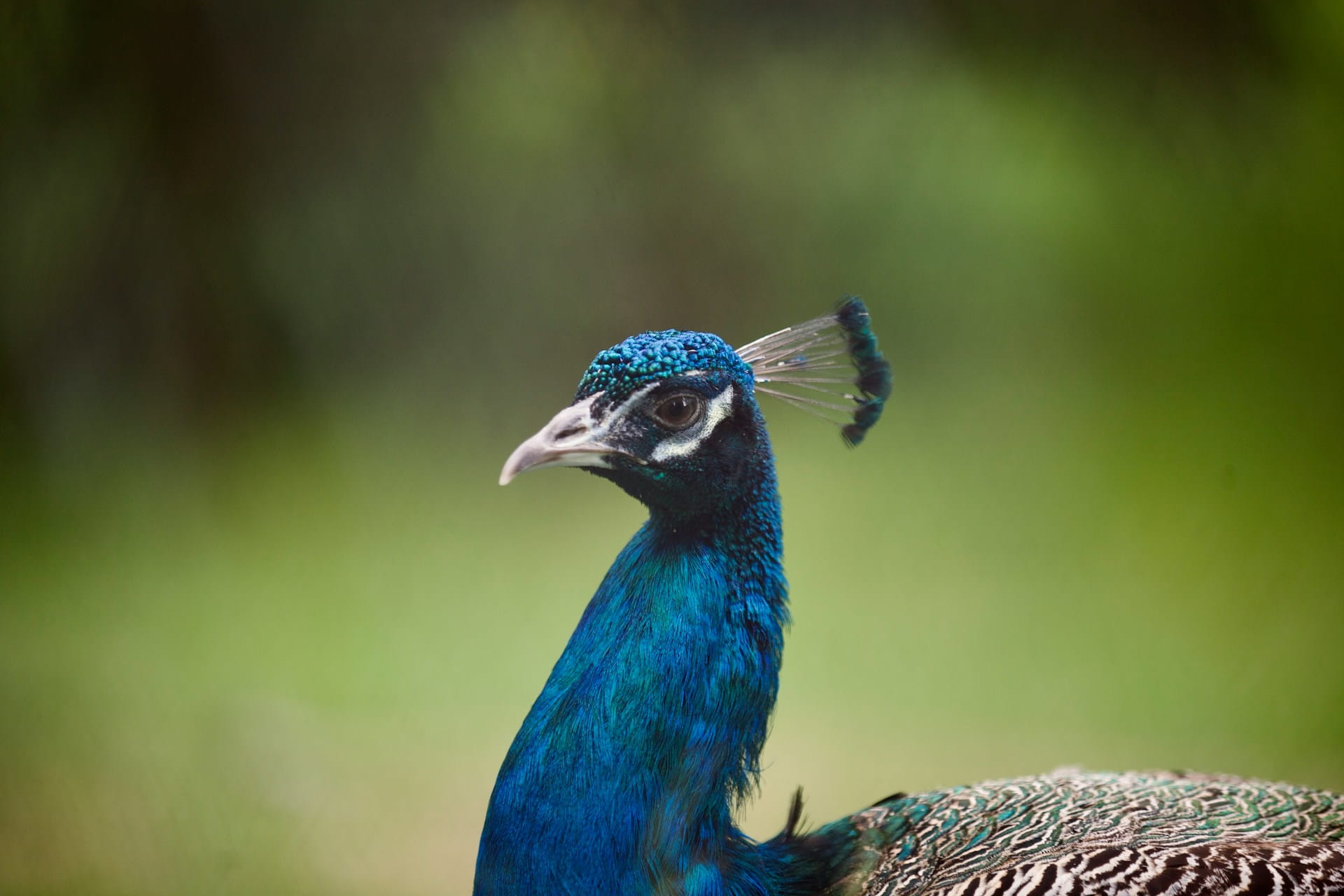
Water buffalo, deer, crocodiles, monitor lizards and a lot of birds share the park with the elephants. Visitors regularly spot water buffalo, sambar deer and a multitude of bird species, and the park has recorded 184 bird species, 33 of them migratory.
Scan the reservoir banks closely. Crocodiles rest on the reservoir banks, and water monitor lizards are common across the park.
Keep half an eye on the trees and scrub too. The park is home to golden jackal, Asian palm civet, toque macaque, tufted grey langur and Indian hare, and the open parkland draws birds of prey such as white-bellied sea eagle and crested serpent-eagle.
Will you see a leopard in Udawalawe?
Probably not, so treat a leopard as a lucky bonus rather than a goal. One safari guide puts it plainly: do not expect to see leopards, it’s very hard to find them.
Sloth bears are rarer still: the Sri Lankan sloth bear is seldom seen because of its rarity in Udawalawe. If big cats are your priority, plan an extra park for that and come to Udawalawe for the elephants.
Where in the park do safaris go?
Drives follow dirt tracks across open grassland, through patches of scrub and down to the edges of the reservoir and rivers. Much of the park is open because areas of open grassland are abundant as a result of former chena farming, which makes animals easier to spot than in thick forest.
The water is where the action gathers. Your driver will head for the reservoir and river edges, where herds come to drink and bathe, and then cut back through the grassland as animals move.
Our complete guide to the park explains how the reservoir and the old farmland shaped the landscape you’ll drive through.
There’s no fixed route, and that’s part of the fun. Your driver will change plans as the animals move, so no two safaris look the same.
Is a morning or an afternoon drive better?
Both are good, because the best hours to visit the park are in the mornings and evenings. Choose the morning for cool air and the first activity of the day, or the afternoon for fewer jeeps and a sunset.
| Morning drive | Afternoon drive | |
|---|---|---|
| When it starts | At the 6.00 a.m. gate opening | Early to mid afternoon, before ticket counters close at 4.00 p.m. |
| What it feels like | Mornings can be chilly, so bring a layer | Warm at the start, cooling towards evening |
| How busy it is | The most popular time to go | Afternoon tours tend to be less busy |
| The light | Soft, low sunrise light | Watch the sunset inside the park |
| Watch out for | An early alarm | All vehicles must be out by 6.00 p.m. |
If you can only do one, we’d pick the morning. If you’re arriving in Udawalawe during the day, an afternoon drive means you don’t lose a day.
How close do jeeps get to the elephants?
Close enough for great views, because the open landscape lets you watch herds from the track. Visitors often have the opportunity to observe these gentle giants up close as they move freely across the park.
A good driver lets the elephants decide the distance. They’ll stop, switch off the engine and wait, rather than pushing in. If an elephant seems unsettled or starts walking towards the jeep, your driver should give it more room.
Never ask a driver to get closer than is safe. A calm, patient drive is better for the animals, and it’s almost always better for your photos too.
What are the rules inside the park?
Stay in the jeep, keep quiet, don’t feed the animals and take your rubbish home. The park’s code of conduct says do not leave your vehicle, lean out of the window or climb on the roof, and do not feed animals or take any material from the park.
Noise and litter matter too. You’re asked to observe strict silence during your jeep safari and to take all the garbage back with you. Drivers are expected to keep to about 25 km/h, which also makes small animals easier to spot.
Plastic is a particular problem in wild places. A Sri Lankan newspaper notes that using plastics and polythene is also prohibited in the park, so pack a reusable water bottle.
If you see another group breaking the rules, you can do something about it. Visitors can make a complaint at the gate giving the vehicle number of the offending party.
Why shouldn’t you feed elephants by the road?
Because feeding teaches elephants to approach vehicles, which is dangerous for them and for people. It’s very important not to feed these animals, yet many people feed the elephants found along the Uda Walawe–Thanamalwila road.
You may see an elephant waiting by the roadside near the park fence, and it’s tempting to stop with some fruit. Please don’t. Take your photo from the car, keep your windows up and drive on slowly.
What should you wear on safari?
Wear light, comfortable clothes in darker or muted colours, plus a warm layer for a morning drive. One guide suggests darker clothing to avoid getting dirty from the occasional muddy tracks, and warns that mornings in the park can be chilly, so bring a jacket or sweater.
Closed shoes are more comfortable than sandals for climbing in and out of a high jeep. A hat with a strap, or a cap, stays on better when the jeep picks up speed.
What should you bring on the drive?
Bring sunscreen, a hat, sunglasses, water and camera equipment, and pack your camera and binoculars. A small bag that sits at your feet is easier than a big backpack in a bouncing jeep.
A few extras help: a light scarf or buff for dust, snacks for a long drive, a plastic-free water bottle and some cash. If you wear glasses, bring a cloth to wipe off the dust.
How do you take good wildlife photos from a jeep?
Use a zoom lens, shoot in the soft morning or late-afternoon light, and ask your driver to switch off the engine before you shoot. One operator recommends a camera with a good zoom lens, because you’ll often be photographing animals across open ground.
Turn up your shutter speed, because the jeep and the animals are rarely still. Brace your elbows on the jeep’s frame, or rest your camera on a folded jacket, instead of using a tripod.
Charge your batteries and clear your memory cards the night before, and pack a spare of each. A dusty, moving jeep is a poor place to swap lenses, so if you carry two bodies or a zoom that covers a wide range, you’ll miss fewer moments.
Don’t spend the whole drive behind the camera. Put it down for a few minutes when a herd is close, and just watch.
Is an Udawalawe safari good for children?
Yes, as long as you choose a shorter drive and plan for the heat. Elephants are easy to see in the open grassland, which keeps children interested, and a short drive of two to four hours is usually long enough.
Pick a morning drive or a late afternoon one to avoid the midday sun, and bring hats, water and snacks. A small pair of binoculars and a simple list of animals to tick off keep younger children busy during the quiet stretches. Talk to your children before you go about keeping quiet and staying seated, so the jeep is calm when you meet a herd. Combining the safari with a visit to the Elephant Transit Home, a rescue centre for orphaned calves set up in 1995 by the Department of Wildlife Conservation, makes a great day for families.
What is the weather like on safari?
Rain is the thing to plan around: most of Udawalawe’s 1,500 mm of annual rain falls between October and January, and again from March to May. Expect greener grass and muddier tracks in the wet months, and dust in the dry ones.
In the rainy season, a 4WD jeep is essential, so make sure yours is one. Bring a light rain jacket if your drive falls in a wet month.
Who guides you on the drive?
Your driver is your guide, spotting animals, choosing the route and explaining what you’re seeing. Safari drivers are generally very knowledgeable about the animals, and the best ones make sure to find the best spots for watching the wildlife.
Ask questions, tell your driver what you most want to see, and they’ll do their best to find it.
How do you book an Udawalawe safari?
Book your jeep and driver the day before, through your hotel or a local operator, and check whether the park ticket is included. Ask how long the drive lasts, what time it starts and whether hotel pickup is included, so there are no surprises at the gate.
Ready for your Udawalawe safari?
Get to the gate early, stay quiet near the herds and let your driver find the animals. To book a private jeep, contact Udawalawe Safari Adventures (we have a business relationship with them), or get in touch with any question we haven’t answered.